How to Keep Training Progress When You Change Gyms
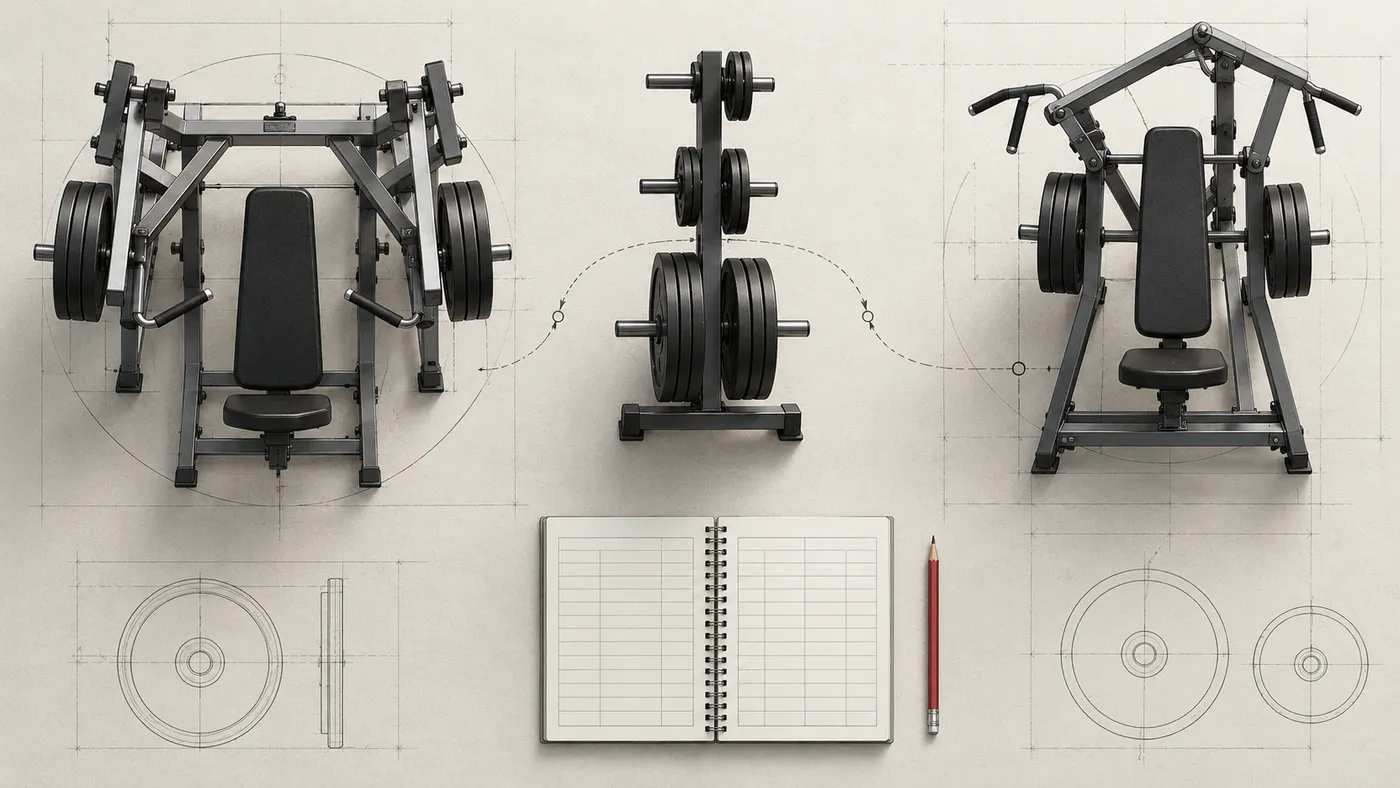
Changing gyms does not erase your training progress, but it does change the baseline you should use for some exercises. Keep your old history, repeat familiar movement patterns, and treat new machines, cable stacks, handles, and setups as a short calibration period rather than a test of whether you got weaker. Your body and training experience come with you; the numbers may need a little context.
A new gym can make a routine feel unexpectedly unfamiliar. The bench angle is different, the cable stack has a different resistance curve, the machines use different levers, or the dumbbells jump in larger increments. It is tempting to copy last week’s numbers exactly and judge the first session harshly when they do not match.
That is the wrong comparison. The goal is not to prove that two gyms are identical. The goal is to build a useful bridge between them.
Keep your old training history
Do not delete, overwrite, or mentally dismiss the sessions you performed at the previous gym. They still show what you trained, how regularly you trained it, the rep ranges you used, and the loads or effort that were productive for you.
Old history is especially useful for preserving the role of an exercise. If a chest press was a secondary push for three sets of 8–12, that tells you more about the next session than a machine’s stack number alone. Keep the same broad target while you learn the new equipment.
Use the previous gym’s numbers as a reference for questions like:
- Which movements have been in your plan long enough to progress?
- What rep range and set count normally work for you?
- Was the last load near the bottom, middle, or top of that range?
- Did you recently change exercise order, volume, or effort?
That context stops a new machine from turning a normal transition into a fake regression.
Treat a new machine as its own baseline
The label on a cable stack or plate-loaded machine is not a universal unit of strength. Two chest presses can feel dramatically different because of leverage, seat position, handle path, friction, or the size of the available jumps. Even a familiar exercise can become a new measurement when the equipment changes.
For the first two or three exposures, use a simple calibration process:
- Keep the exercise’s usual job and rep range.
- Start conservatively enough to make the first working set controlled.
- Record the actual load, reps, and any setup detail that matters.
- Add load only when the new setup earns it through repeatable performance.
For example, a 70 kg chest press at your old gym may not translate to the 70 label at the new one. Begin below your old number if the machine is unfamiliar, find a load that fits your planned reps, and let that result become the new reference. You are not starting your training from zero; you are making a new ruler for one piece of equipment.
 Your earlier sessions remain useful context, even when the next machine needs its own baseline.
Separate the movement from the exact setup
Some changes are small enough to stay on the same progression track. Using another identical cable column or a second adjustable bench with the same angle may only need a brief note. Other changes deserve a clearer separation.
Create a distinct reference when you change a meaningful part of the exercise:
- cable stack, plate-loaded machine, or selectorized machine with a different resistance feel;
- handle, grip, seat height, or pad position that materially changes the movement;
- bar, dumbbell set, or rack that forces a different loading jump;
- range of motion or exercise order that changes how the work feels.
This is not about making your log fussy. It is about protecting future decisions. A note such as “new gym, chest press seat 5” gives a lower-rep day an honest explanation. After a few sessions, you may not need the note at all because the new setup has its own clear pattern.
For more detail on why stack numbers are not interchangeable, read How to Track Machine Weights Accurately.
Keep the program stable while the equipment changes
Changing gyms already introduces enough variables. Avoid changing your split, exercise order, rep ranges, and progression rule in the same week unless you have a real reason to do so.
Keep the parts you can control stable:
- retain the main movement patterns and priority muscles;
- use the same general set and rep targets;
- keep rest periods reasonably similar;
- leave a comparable amount in reserve;
- make only the equipment or load adjustment that the new gym requires.
This makes the transition easier to read. If your new leg press needs a lower stack setting but you complete the same three controlled sets in the same range, the training can still be on track. If the new gym does not have a close match, choose a sensible alternative and give that exercise its own baseline rather than forcing an imaginary conversion. Our guide to planning exercise substitutions can help with that decision.
Review after a few exposures, not one session
The first workout at a new gym is mostly reconnaissance. The second tells you whether your first estimate was sensible. By the third or fourth exposure, you can begin making normal progression decisions again.
Look for the usual signs:
- more reps at the same new-gym load;
- the same reps with a little more load;
- less drop-off across sets;
- a familiar effort level with more control;
- a setup that now feels repeatable rather than improvised.
Do not demand a direct comparison with the old stack number. Compare your recent performances on the new setup with one another. If your performance stays unexpectedly down across several familiar movement patterns—not just one machine—then look at sleep, recovery, exercise order, and the overall transition. One awkward machine is usually equipment context, not a verdict on your strength.
Let the new gym teach you what to log
Most gym changes do not require a detailed spreadsheet. Add detail only when it protects a decision you will want to make later. Useful examples include:
- “new cable stack; neutral handle”
- “plate-loaded press; seat 4”
- “dumbbells jump by 5 kg here”
- “rack occupied; used machine press”
Those notes should shrink as the gym becomes familiar. The target is not a perfect record of every room. It is a clear history that explains why a number changed and tells you what to do next time.
Steady is at its best in that transition: a focused place to keep the workouts you actually completed, review what was working, and make the next target sensible. Keep your old history, give changed equipment a fair baseline, and let the new gym become familiar one session at a time.
Ready to start applying progressive overload?
Ditch the spreadsheets and complex notes. Join thousands of lifters who use Steady to focus on the workout, track their progress, and automatically know when to add weight.
Download Free for iPhone