How Long Should a Workout Last?
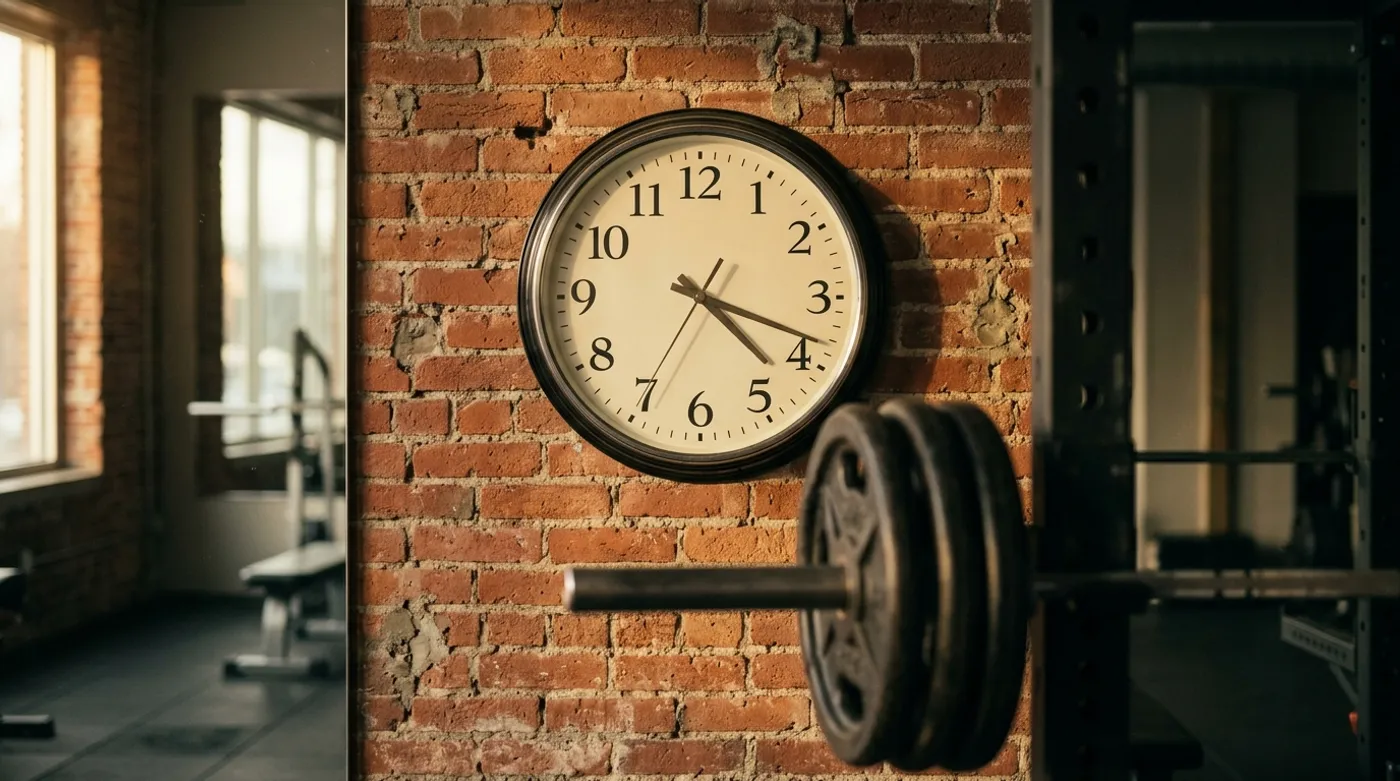
Most effective strength training sessions last 45 to 75 minutes, not counting your warm-up. That’s the range where you can do enough quality work to drive progress without your focus, recovery, or hormones falling off a cliff.
That answer is a starting point, not a rule. The right length for your workout depends on your training split, how many exercises you’re running, your rest times, and how much time you actually have. This post breaks down all of that.
The short answer
For most people doing structured strength training:
- Beginners: 30–45 minutes per session is plenty
- Intermediate lifters: 45–60 minutes
- Advanced lifters or longer splits: 60–90 minutes
If you’re consistently lifting for more than 90 minutes, something is off — your rest times are too long, your program has too much volume, or you’re getting distracted between sets.
Why workout duration matters
Time in the gym isn’t a vanity metric. It actually affects how good your training is:
- Focus drops over time. After about an hour of hard sets, most lifters lose the mental sharpness needed to push heavy compounds safely.
- Recovery has a ceiling. Doing 30 sets in one session doesn’t produce twice the growth of 15 quality sets — past a point, you’re just adding fatigue.
- Consistency beats marathons. A 50-minute workout you’ll do four times a week will beat a 2-hour session you skip half the time.
The goal isn’t to spend as much time as possible at the gym. It’s to do enough hard, focused work to grow stronger, then leave.
How to calculate the right length for your workout
Workout length is mostly a function of three things: number of working sets, average rest time, and exercise type. A useful estimate:
Estimated session time = (working sets × average set duration) + (rest periods × average rest time) + warm-up + transitions
A practical example for a typical hypertrophy session:
- 5 exercises × 3 working sets = 15 working sets
- Each set: ~45 seconds of work
- Average rest: 2 minutes between sets
- Warm-up: 5–8 minutes
- Transitions between exercises: 2–3 minutes total
That works out to roughly 50–55 minutes — right in the sweet spot.
How long different splits should take
Different training splits naturally lead to different session lengths because the volume per session changes.
Full-body workout — 60 to 75 minutes
You’re hitting most major muscle groups in a single session, so volume is high. Expect 6–8 exercises and 3 working sets each. With reasonable rest, sessions land around 60–75 minutes.
Upper / lower split — 50 to 70 minutes
You’re spreading the load across two day types, so each session focuses on either upper or lower body. 5–7 exercises, often with one heavy compound, lands at 50–70 minutes.
Push / pull / legs — 45 to 70 minutes
Each session is more focused: only push muscles, only pull muscles, only legs. Expect 5–6 exercises at moderate volume, or 4 exercises with higher volume per movement.
If you want to dig deeper into split selection, see our guides on full body vs split routines and how to build a push/pull/legs routine.
What about rest times?
Rest between sets is the biggest variable in total session length. Two lifters doing the exact same program with different rest times can finish 20 minutes apart.
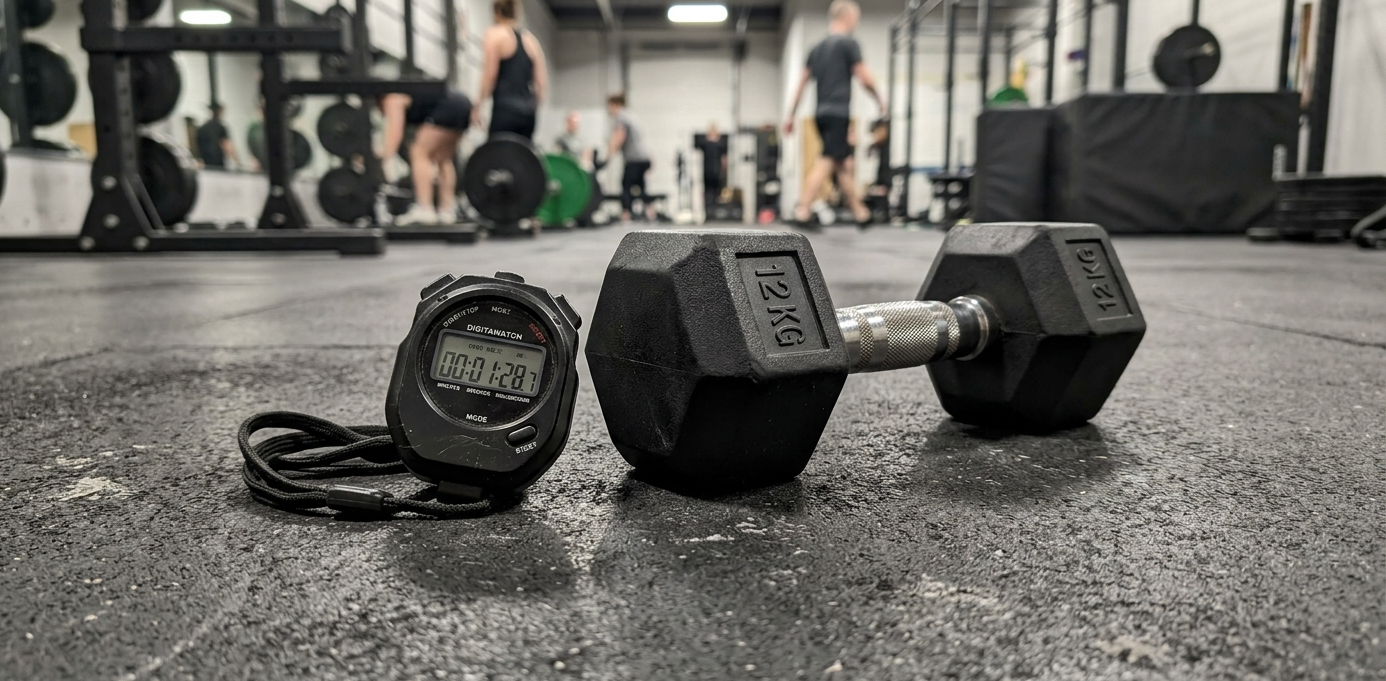 Rest time is the single biggest variable in total session length — track it deliberately.
Quick guide:
- Heavy compound lifts (squats, deadlifts, bench): 2–4 minutes
- Accessory compounds (rows, presses, lunges): 90–120 seconds
- Isolation work (curls, lateral raises, calf raises): 60–90 seconds
Resting too short undercuts strength on the next set. Resting too long stretches your workout for no reason. Most people err on the long side — usually because they’re scrolling. If your rest times keep ballooning, it’s worth tracking them with a dedicated rest timer.
Common reasons workouts run too long
If you keep ending up with 2-hour sessions, it’s usually one of these:
- Phone distractions between sets. Social media stretches a 90-second rest into 5 minutes without you noticing.
- Too many exercises. More than 8 exercises in a single session usually means some of them aren’t earning their place.
- Junk volume. Adding extra sets that don’t add stimulus — they just add time and fatigue.
- Long warm-ups. A 20-minute warm-up before a 40-minute lift is a poor ratio. 5–10 minutes of general movement plus 1–2 ramp-up sets per heavy lift is enough.
- Chatting between sets. Social training is great. Just keep an eye on the clock.
Common reasons workouts are too short
Going the other direction — sessions under 25 minutes for an intermediate lifter usually means:
- Skipping working sets
- Resting too little and dropping intensity
- Cutting accessories that drive growth
- Not warming up enough to lift safely
Short workouts can absolutely work — but only if every set in them is high quality.
How Steady helps you keep sessions tight
Most of the time-wasters above come from the phone itself. The fitness app you’re using shouldn’t be one of them.
Steady is built around exactly this problem. There’s no social feed to scroll, no notifications during a session, and no overcrowded “workout store” to navigate. The screen shows you the exercise, your last working set, and the rest timer — that’s it. When the timer ends, you’re back to lifting.
If you’ve been struggling with sessions that drag on, try logging your next four workouts with the timer running. Most lifters find their actual training time is shorter than they thought — and the time spent between sets is what blew up the clock.
Bottom line
A good strength workout takes 45 to 75 minutes for most lifters. If yours runs longer, look at rest times and exercise selection before adding more work. If it runs shorter, make sure every set is actually high quality.
Train hard, train focused, and get out of the gym. Your recovery — and your week — will thank you.
Ready to start applying progressive overload?
Ditch the spreadsheets and complex notes. Join thousands of lifters who use Steady to focus on the workout, track their progress, and automatically know when to add weight.
Download Free for iPhone