Should You Use Lifting Straps?
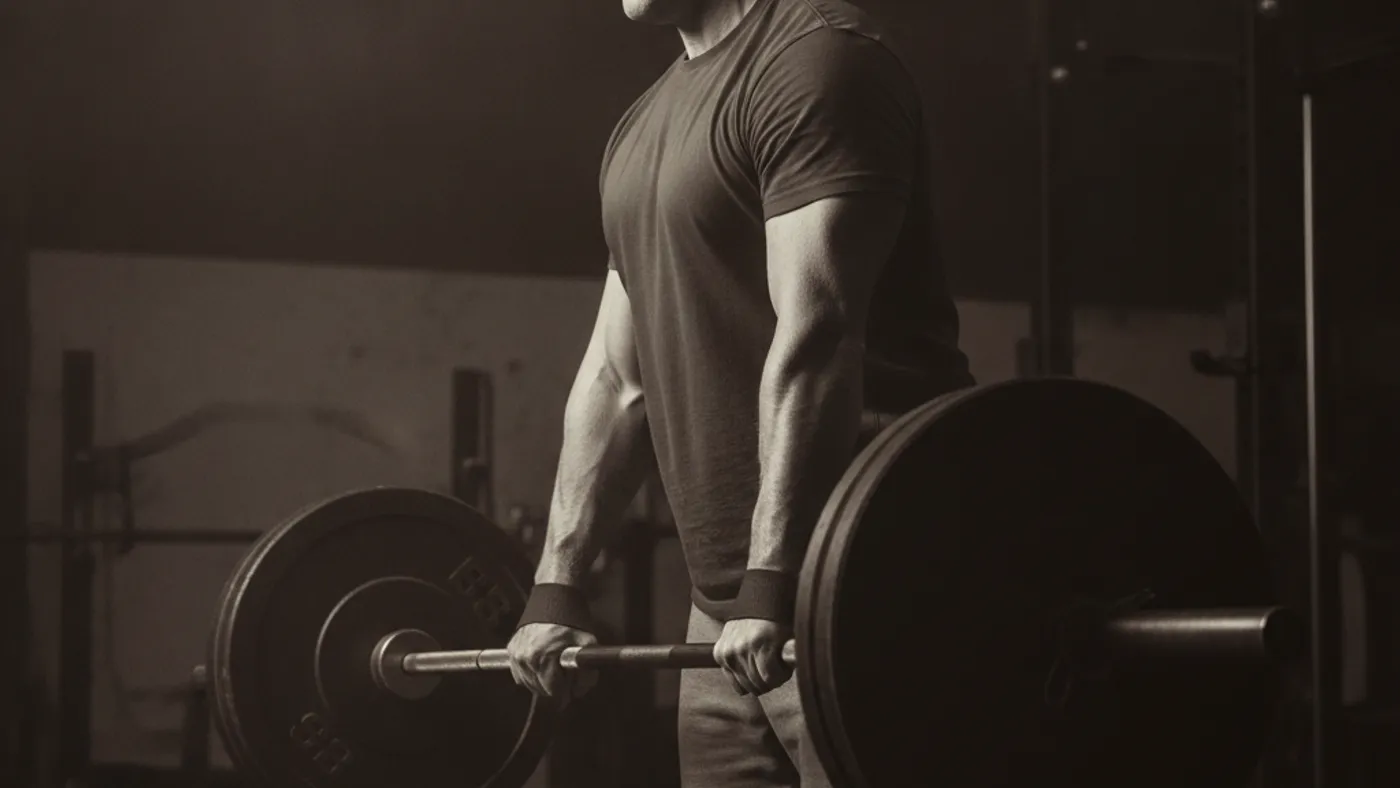
You should use lifting straps when your grip is the limiting factor before the target muscles are done working. Straps are most useful on pulling exercises like deadlifts, Romanian deadlifts, barbell rows, shrugs, pulldowns, and heavy dumbbell work. They are not cheating if they help you train the intended muscle harder; they become a problem only when you use them so often that your grip never gets trained.
The practical rule is simple: let your grip do as much work as it reasonably can, then use straps when grip failure would cut the set short for the wrong reason.
What lifting straps actually do
Lifting straps wrap around your wrist and the bar, creating a stronger connection between your hands and the weight. They do not lift the weight for you. They reduce the amount of force your fingers need to maintain so your back, hamstrings, traps, or lats can keep working after your grip starts to fade.
That distinction matters. If your goal is to build grip strength, straps remove part of the challenge. If your goal is to train your back with a heavy row, straps can make the set more specific.
Think of straps as a tool for matching the limiting factor to the goal of the exercise.
When straps are worth using
Straps make the most sense when the target muscle is not your grip.
Use them when:
- Your grip fails before your back, hamstrings, or traps feel close to done.
- The exercise is meant to load a large muscle group, not test your hands.
- You are doing higher-rep pulling work where grip fatigue accumulates faster than the target muscle fatigue.
- You are already doing enough grip work elsewhere through warm-ups, deadlift sets, carries, rows, or direct forearm work.
Common examples:
- Romanian deadlifts. If your hamstrings and glutes still have reps left but your fingers are opening, straps help keep the set focused.
- Barbell or dumbbell rows. Straps can help you stop turning every back set into a grip endurance test.
- Shrugs. The traps can usually handle more load and more time under tension than the hands.
- Pulldowns and cable rows. Straps can help lifters who feel their forearms burning before their lats.
- High-rep deadlift variations. For back-off sets, straps can preserve the hinge stimulus without making the whole session about grip survival.
Straps are especially useful when a set is supposed to train a hinge or pull pattern, not become an accidental grip test.
When to skip straps
Do not use straps automatically on every pulling set. That is where lifters run into trouble.
Skip them when:
- You are warming up. Warm-up sets are a free chance to practice holding the bar without extra help.
- The load is easy for your grip. If your hands are not the limiting factor, straps are just extra setup.
- You are training grip on purpose. Carries, hangs, double-overhand deadlifts, and thick-handle work need the hands to do the job.
- You compete in a sport where straps are not allowed. Powerlifting, strongman events, and weightlifting each have their own rules and habits. Train the way your sport demands.
- You are masking a technique problem. If the bar is rolling because your setup is loose, your hand position is inconsistent, or your chalk use is poor, fix that first.
Most lifters do well with a mixed approach: no straps for warm-ups and lighter work, straps for the heaviest or highest-rep pulling sets where grip would end the set early.
Are straps cheating?
Lifting straps are not cheating in normal gym training. They are no more “cheating” than using a belt, chalk, wrist wraps, or a machine instead of a free-weight variation. The question is whether the tool supports the purpose of the set.
If you are doing Romanian deadlifts to grow your hamstrings, and your grip fails six reps before your hamstrings are challenged, straps make the exercise more honest. They let the target muscle decide when the set ends.
If you use straps on every deadlift from the empty bar upward because holding the bar feels uncomfortable, that is different. Then the tool is preventing adaptation instead of supporting it.
A useful test: after the workout, could you explain why straps were used on that set? If the answer is “so my back could keep working,” good. If the answer is “because I always do,” reconsider.
How straps affect grip strength
Straps can reduce grip training if they replace all strapless work. They do not ruin your grip automatically.
Grip strength comes from repeated exposure to holding loads. If you still warm up strapless, row lighter sets strapless, carry dumbbells, and occasionally train holds or hangs, your grip will keep getting stimulus. The issue appears when straps remove almost every heavy hold from your training week.
Try this balance:
- Do warm-up sets without straps.
- Keep your first working set strapless if grip is reliable.
- Add straps when grip starts limiting the target muscle.
- Include at least one simple grip exposure each week, such as farmer carries, dead hangs, or timed barbell holds.
You do not need a complicated grip program unless grip is a specific goal. You just need enough honest strapless work that your hands are not completely outsourced.
How to track strapped vs strapless sets
The biggest tracking mistake is comparing strapped and strapless sets as if they are exactly the same. A strapped 225 lb row for 10 reps and a strapless 225 lb row for 10 reps are both useful, but they do not tell the same story.
Log the key detail somewhere. For example:
- “Straps on sets 3-4”
- “Strapless until final set”
- “Grip failed at rep 8, back had more”
- “Used straps for RDL top set”
You do not need to over-document every accessory set. Just mark the sets where straps changed the performance. That way, next week you know whether a rep PR came from stronger pulling, better grip support, or both.
This is also where a focused workout tracker helps. In Steady, you can keep the set data clean and add a short note when equipment changes the context. No social feed, no cluttered program store, just the details that help you understand your own training.
The best practical approach
For most lifters, the best approach is:
- Train strapless until grip becomes the wrong limiting factor.
- Use straps on heavy or high-rep pulling sets where the target muscle should keep working.
- Keep some strapless exposure in your week so grip does not fall behind.
- Track when straps are used so progression stays honest.
That gives you the best of both sides: stronger pulling sessions without pretending grip does not matter.
The takeaway
Use lifting straps when grip failure is stopping a back, hinge, or trap exercise before the target muscles are properly challenged. Skip them when grip strength is the goal, when the load is easy to hold, or when you are warming up.
Straps are a tool, not a personality trait. Use them deliberately, log when they matter, and let your training data show whether they are helping you progress.
Ready to start applying progressive overload?
Ditch the spreadsheets and complex notes. Join thousands of lifters who use Steady to focus on the workout, track their progress, and automatically know when to add weight.
Download Free for iPhone