How Training Age Changes Strength Progress

Training age is the amount of consistent, structured lifting experience you have—not the number of birthdays since you first joined a gym. It changes how quickly you improve, how much training you can recover from, and what counts as a useful signal in your log. The newer you are, the more often progress may show up from session to session. The longer you have trained, the more progress looks like a patient trend rather than a weekly leap.
That shift is normal. It does not mean an experienced lifter has run out of potential, and it does not mean a newer lifter should force a new personal best every workout. It means the same training result needs a different interpretation at different stages.
What training age actually means
Training age is a practical description of exposure to repeatable training. A person who lifted inconsistently for five years may have a lower training age than someone who followed a sensible, progressive routine for eighteen months.
It is not a perfect ranking system. Exercise familiarity, previous sports, body size, recovery, and the quality of past training all matter. But it is a useful lens because it explains why two people can run the same program and get very different-looking results.
The important word is consistent. A few enthusiastic months, followed by long gaps and frequent program changes, do not create the same base as repeated months of comparable work.
Early progress is often fast—and partly about skill
Newer lifters usually improve quickly because they are learning how to produce force in movements they have not practiced much before. Better coordination, a more reliable setup, and more confidence under a challenging load can raise performance before visible muscle gain becomes obvious.
That is why a beginner might add reps or load frequently on a familiar exercise. Enjoy it, but do not mistake that early pace for the permanent rule. The useful habit is to record the work accurately while it is moving fast. A clear baseline makes later progress easier to see.
Early on, keep the goal simple:
- repeat a small group of movements often enough to learn them
- use loads that make the intended reps challenging but controlled
- add a rep or a small amount of weight only when the previous work supports it
- avoid changing the exercise, rep range, and schedule all at once
The result is not a perfect program. It is clean evidence about what you can do now.
As you gain experience, progress becomes more specific
With more training behind you, strength gains usually arrive less often and in smaller pieces. That is not a failure of progressive overload. It is the cost of being further from your starting point.
An experienced lifter may spend several weeks making a familiar load feel more controlled, adding one rep to one hard set, or keeping performance steady through a stressful stretch. Those outcomes can be meaningful because they happen on a much higher and more stable base.
This is also when comparisons need to get cleaner. If you changed from a barbell to a machine, shortened your rest, added extra sets, and slept badly, the number on the stack tells you very little by itself. Compare like with like: similar exercise, target range, rest, and effort.
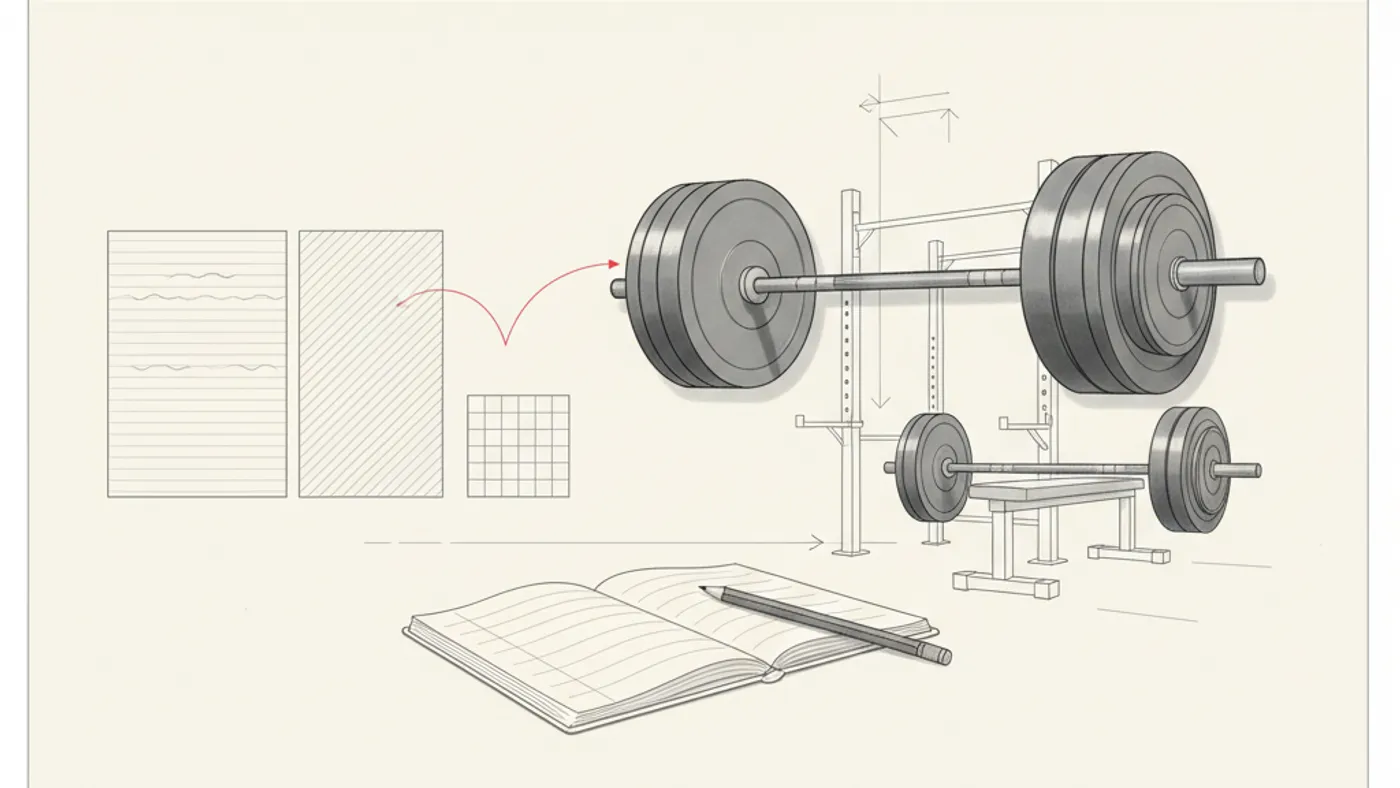
Long-term progress is easier to read when comparable sessions have a place in the same timeline.
Change the size of the goal, not the standard
When progress slows, many lifters respond by making every session more complicated. They add exercises, chase fatigue, or turn one ordinary off day into a new plan. A better move is to make the next target smaller and more precise.
For example, a newer lifter may aim to move from three sets of eight to three sets of nine next time. A more experienced lifter may aim to repeat the same three sets with a steadier final rep, the same work at a slightly lower perceived effort, or one additional rep across the whole session over the next few exposures.
Both are progression. The standard stays the same: the change should be earned by what you actually performed, not by impatience.
Let the log match your stage
Your log should become more useful as the easy gains slow down. You do not need to track everything, but you do need enough context to understand the result later.
For most lifters, that means keeping these details stable and visible:
- Sets, reps, and load. These are the core comparison.
- The intended range or target. It tells you whether a good-looking number actually did the planned job.
- Effort when it matters. A short RPE or reps-in-reserve note can explain why two identical sets were not equally demanding.
- A brief exception note. Record the unusual travel day, poor sleep, equipment change, or shortened rest only when it changes how you read the session.
The longer you train, the more valuable boring, comparable entries become. A reliable history can show that a six-week stretch was productive even if no single workout felt dramatic.
Common mistakes at every training age
Expecting beginner-speed progress forever. Fast early improvement is encouraging, but slowing down does not mean the program stopped working. It often means your comparison window needs to widen.
Using calendar years as the whole story. Someone can have years around the gym without many months of consistent progressive training. Judge the recent pattern, not the oldest membership date.
Adding volume just because numbers slowed. More work is only useful when the current work is well recovered and no longer moves. First check whether the sessions are comparable and whether recovery supports another demand.
Changing the plan before you have a trend. One flat workout is a data point. Several comparable sessions pointing the same way are a reason to investigate.
Treating maintenance as failure. Holding strength through travel, a hard work period, or a lower-energy season can be exactly the right outcome. Training does not have to rise in a straight line to be successful.
Give your progress the right time scale
Training age should make you more patient, not less ambitious. Newer lifters can build momentum by learning a few movements and progressing them steadily. More experienced lifters can keep moving by respecting smaller wins, clearer comparisons, and longer review windows.
Steady keeps those comparable workouts in one focused training log, without turning the review into a social feed or a pile of generic programs. Record the work, give it enough time, and let the trend—not one loud session—tell you what to do next.
Ready to start applying progressive overload?
Ditch the spreadsheets and complex notes. Join thousands of lifters who use Steady to focus on the workout, track their progress, and automatically know when to add weight.
Download Free for iPhone