How to Set Up a Lat Pulldown for Better Back Training
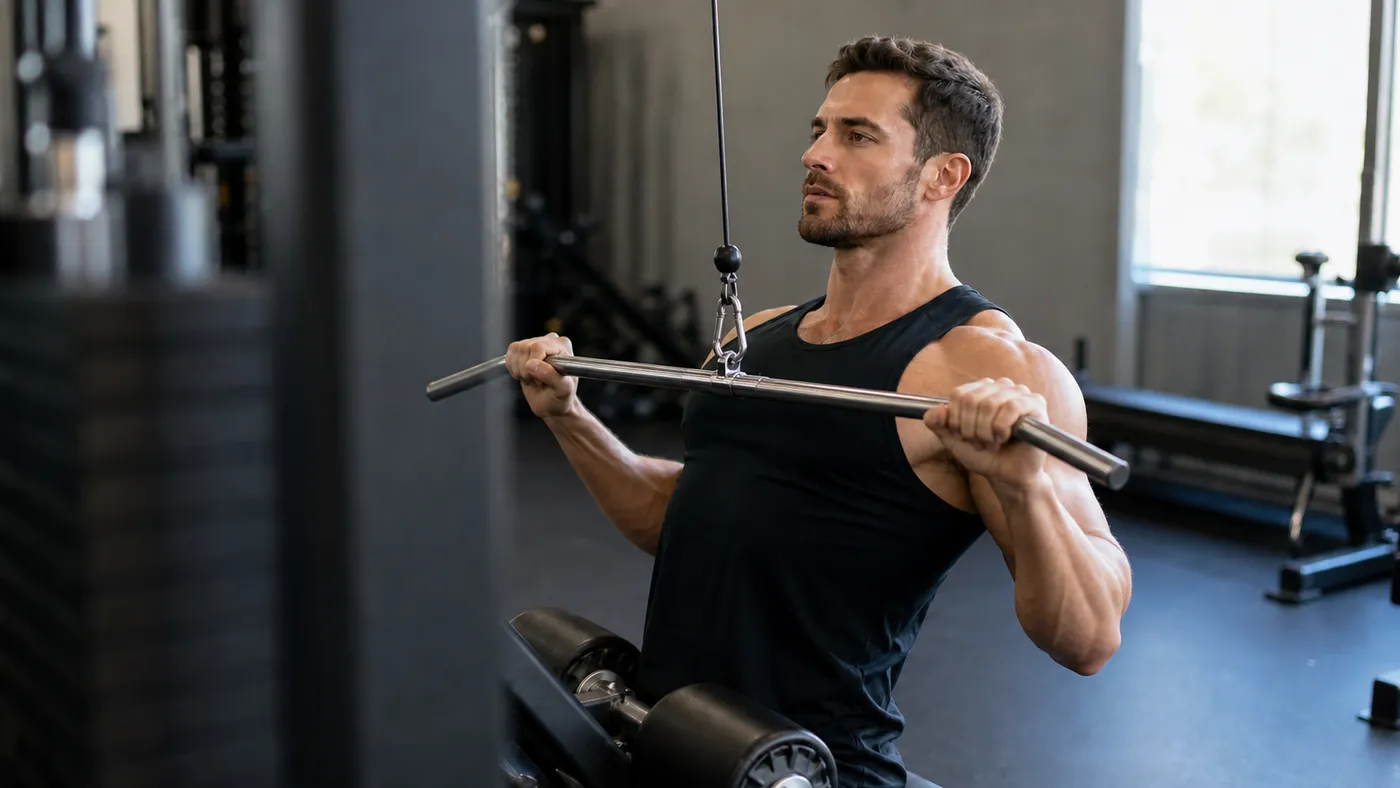
Set up a lat pulldown by locking your thighs under the pads, keeping your feet planted, lifting your chest without over-arching your lower back, and pulling your elbows down toward your sides. Use a handle and grip that let your shoulders stay comfortable, then choose a load you can control through the same path on every rep.
The lat pulldown is one of the simplest ways to train a vertical pull, but it is easy to turn into something else. Too much load can make you lean back, shrug, swing, and pull mostly with your arms. A steady setup lets you feel your back work, repeat the movement next week, and make your log useful.
Start with the seat and thigh pads
Set the seat so your feet are flat and secure. Adjust the thigh pad until it holds you down firmly when the bar pulls upward, without pinning your legs uncomfortably. If you lift off the seat at the top of a rep, lower the pad or reduce the load.
Sit tall before you start. Let your ribs stay stacked over your pelvis, with a small natural curve in your lower back—not a dramatic lean. A slight backward lean is fine if it helps clear the bar and feels stable, but you should not have to turn the pulldown into a row to finish the rep.
Choose a grip your shoulders tolerate
A shoulder-width or slightly wider overhand grip is a solid default. A neutral-grip handle often feels friendlier on the wrists and shoulders, and an underhand grip usually brings more biceps into the movement. None is automatically best; choose the one that lets you pull smoothly without shoulder pinching or wrist strain.
Avoid chasing an extreme wide grip. It often shortens the useful range, makes the bottom position awkward, and does not guarantee better lat development. Your best grip is usually the one you can own with a controlled stretch at the top and a stable finish near the upper chest.
Pull with your elbows, not your hands
Start each rep by letting your arms reach overhead under control. Keep your shoulders active rather than completely loose, then think about driving your elbows down and slightly forward toward your ribcage. Your hands hold the handle; your elbows create the path.
Pull the handle toward the top of your chest or collarbone area, depending on the attachment and your build. Stop when your elbows have come down as far as you can without your shoulders rolling forward, your chest collapsing, or your torso swinging back. Then return slowly until you feel a comfortable stretch through your sides and upper back.
Do not pull behind your neck. For most lifters, it adds an awkward shoulder position without offering a useful advantage over a controlled front pulldown.
Keep the load honest
The right weight lets you keep the same torso position and elbow path from the first rep to the last. If the stack makes you rock backward, yank the handle down, or cut the top stretch short, it is too heavy for the target reps today.
For many back-focused sets, 8 to 15 controlled reps work well. Begin with a load that leaves you with one to three good reps in reserve, then build reps before adding a small amount of weight. This is easier to assess when you use the same handle, seat setting, and range of motion each time.
Make your setup repeatable
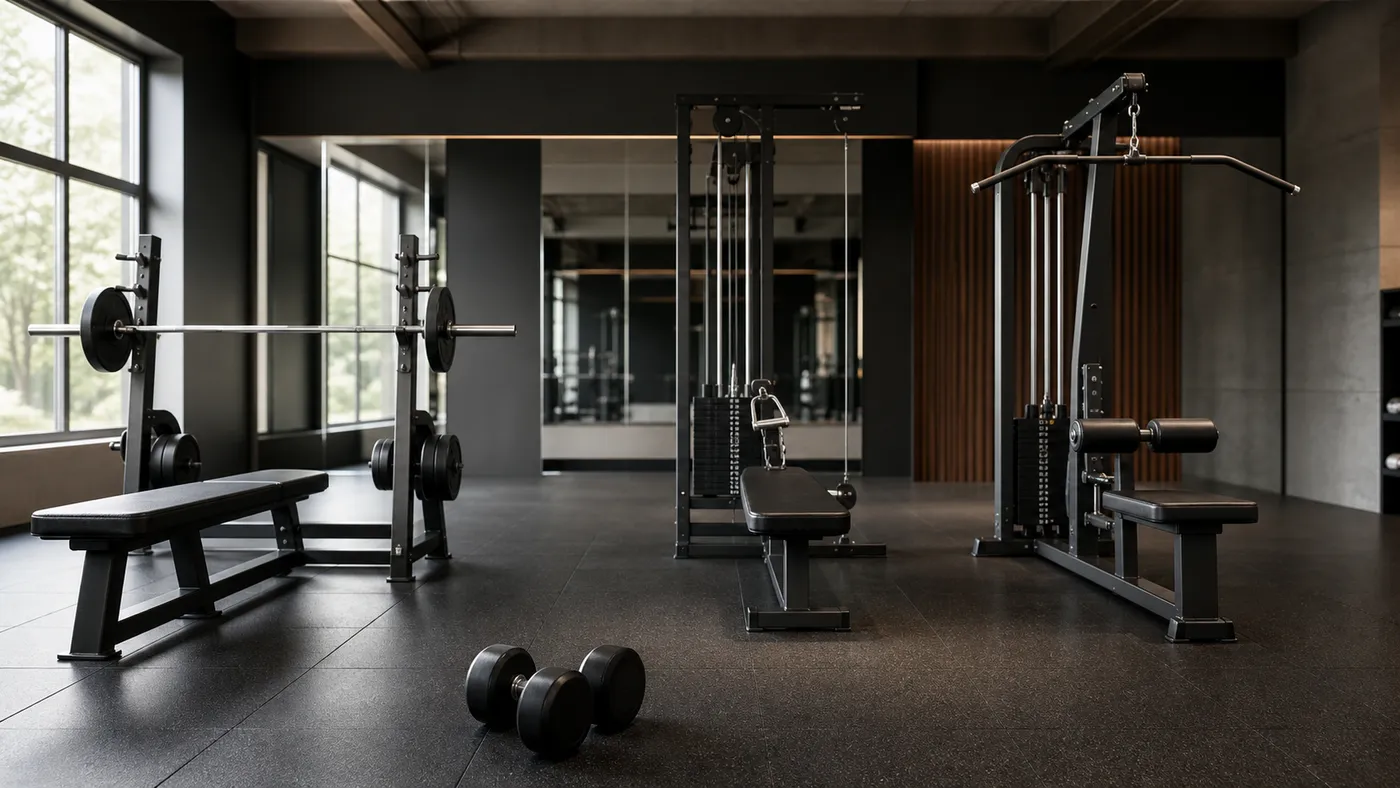 A repeatable station setup makes your next pulldown set—and your next workout—easier to compare.
Treat the seat position, thigh-pad setting, handle, and grip as part of the exercise. If you use a different machine, note that rather than assuming the number on the stack means the same thing. A small setup change can alter how the movement feels and where it is hardest.
Your log does not need a long paragraph. A note like “neutral handle, seat 4, thigh pad 3” is enough to make a productive setup easy to find again. Then track the weight, reps, and how close the set was to your limit.
Three mistakes that make pulldowns less useful
Turning it into a full-body swing
A little torso angle is normal. Repeatedly throwing your whole body backward to move the stack is not. Reduce the load, brace your midsection, and let your elbows do the work.
Stopping the bar too high
If the handle barely passes your forehead, you may be leaving useful range on the table. Use a lighter load and pull until your elbows are down by your sides, provided your shoulders stay comfortable.
Chasing a perfect lat sensation
Feeling your lats is useful feedback, but it is not the only sign of a good set. Clean reps, a consistent range, stable technique, and gradual progress matter more than trying to create an intense burn on every set.
Where the lat pulldown fits
The lat pulldown works well as the main vertical pull in a back session, especially when you want a stable exercise that is easy to load and repeat. Pair it with a row for more mid-back work, then add smaller movements only when they have a clear job. For a full session framework, see How to Build a Pull Day Workout.
Keep the setup simple enough to repeat. When the seat, handle, range, and effort are consistent, a few extra reps or a small load increase tells you something real. Steady makes that kind of focused progress easy to log—without turning your workout into a complicated project.
Ready to start applying progressive overload?
Ditch the spreadsheets and complex notes. Join thousands of lifters who use Steady to focus on the workout, track their progress, and automatically know when to add weight.
Download Free for iPhone