How to Build a Shoulder Workout
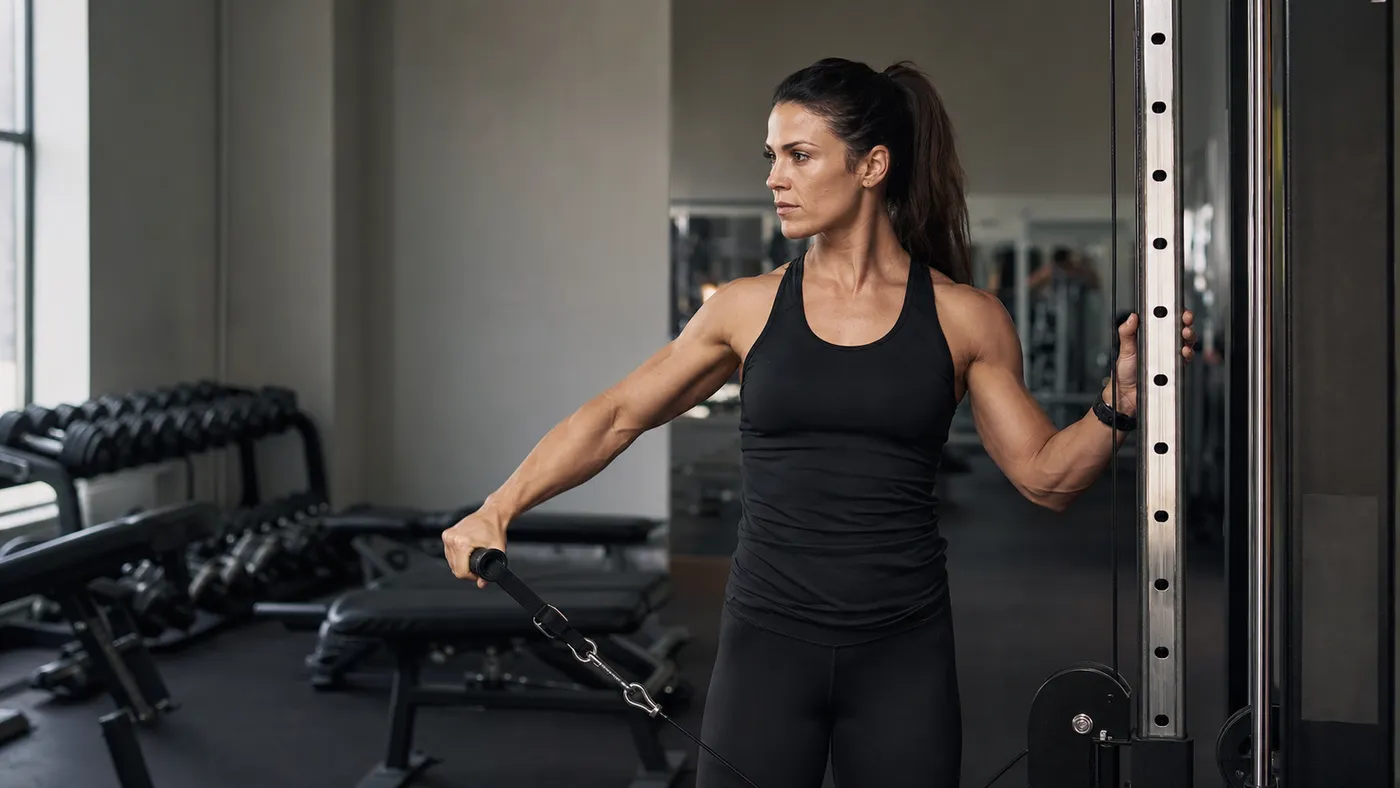
An effective shoulder workout should train the front, side, and rear delts without filling the session with redundant presses. For most lifters, that means one overhead press, one or two lateral raise variations, and one rear-delt movement for roughly 10 to 14 hard working sets.
The exact exercises matter less than the roles they fill. Pick stable movements you can repeat with consistent technique, use moderate-to-high rep ranges for raises, and progress them patiently instead of chasing load at the expense of the target muscle.
What a Complete Shoulder Workout Needs
The deltoid has three regions with different jobs:
- Front delts help raise the arm forward and contribute heavily to bench presses, incline presses, and overhead presses.
- Side delts lift the arm out to the side and create much of the shoulder width people want from direct shoulder training.
- Rear delts move the upper arm backward and help with horizontal pulling and shoulder control.
A dedicated shoulder session should account for all three, but not necessarily with equal direct volume. Front delts already receive substantial work from chest pressing. Side and rear delts often need more intentional isolation work.
A simple structure is:
- Overhead press — machine, dumbbell, or barbell press
- Primary lateral raise — cable, machine, or dumbbell raise
- Rear-delt exercise — reverse pec deck, cable rear-delt fly, or chest-supported rear-delt raise
- Secondary lateral raise — a different setup or rep range
- Optional upper-back or rear-delt movement — face pull or a controlled wide-elbow row
That is enough. A shoulder workout does not need eight variations that all become increasingly sloppy versions of the same raise.
Start With One Press
Put your most demanding press first while you are fresh. A machine shoulder press offers stability and makes it easier to focus on the delts. Dumbbells allow each arm to find a comfortable path. A barbell overhead press is useful when overhead strength is a major goal, but it also creates more whole-body fatigue.
Use 3 working sets of 6 to 10 reps for a heavier press or 8 to 12 reps for a more stable machine or dumbbell variation. Stop the set when you can no longer keep the same bar path and controlled range of motion.
If your weekly program already contains a lot of bench and incline pressing, the overhead press is not mandatory. You can replace it with more side- and rear-delt work when those areas are the actual priority.
Give Side Delts Direct Work
Presses train the front delts well, but they do not fully replace lateral raises. Use at least one raise variation that keeps the setup stable enough for you to feel the side delt working instead of swinging the weight upward.
Good options include:
- Single-arm cable lateral raise
- Machine lateral raise
- Seated dumbbell lateral raise
- Leaning cable lateral raise
Perform 3 to 4 sets of 10 to 20 reps. Lead with the elbow, keep the shoulder from shrugging excessively, and use a range you can control. The weight does not need to reach head height; raising the upper arm to around shoulder level is enough for most people.
If you add a second lateral raise later in the session, change the constraint rather than repeating the exact movement. For example, pair a controlled cable raise with a higher-rep machine raise.
Do Not Leave Rear Delts to Rows Alone
Rows involve the rear delts, but back training often becomes limited by the lats, mid-back, or biceps first. Direct rear-delt work gives you a clearer way to progress the muscle without turning every row into a wide-elbow shoulder exercise.
Choose a reverse pec deck, cable rear-delt fly, or chest-supported rear-delt raise for 3 sets of 12 to 20 reps. Keep the torso still and think about moving the upper arms outward and back. If your traps take over, reduce the load and make the path more repeatable.
Face pulls can also fit, especially if you enjoy them, but they do not have to appear in every shoulder program. Use them as an optional rear-delt and upper-back movement rather than a compulsory warm-up ritual.
Sample Shoulder Workout
Here is a balanced session for muscle growth:
- Machine shoulder press — 3 sets of 6–10 reps
- Single-arm cable lateral raise — 3 sets of 10–15 reps per side
- Reverse pec deck — 3 sets of 12–20 reps
- Seated dumbbell lateral raise — 2 sets of 15–20 reps
- Face pull — 2 sets of 12–20 reps
That gives you 13 working sets. If you also train chest and back hard during the week, this is already a meaningful amount of shoulder volume. Start at the lower end and add work only when performance, recovery, and joint comfort support it. Stop any movement that causes sharp, worsening, or persistent pain, and seek qualified guidance when appropriate. Our guide to weekly sets per muscle group explains how to adjust the total around the rest of your program.
Progress Raises Without Turning Them Into Swings
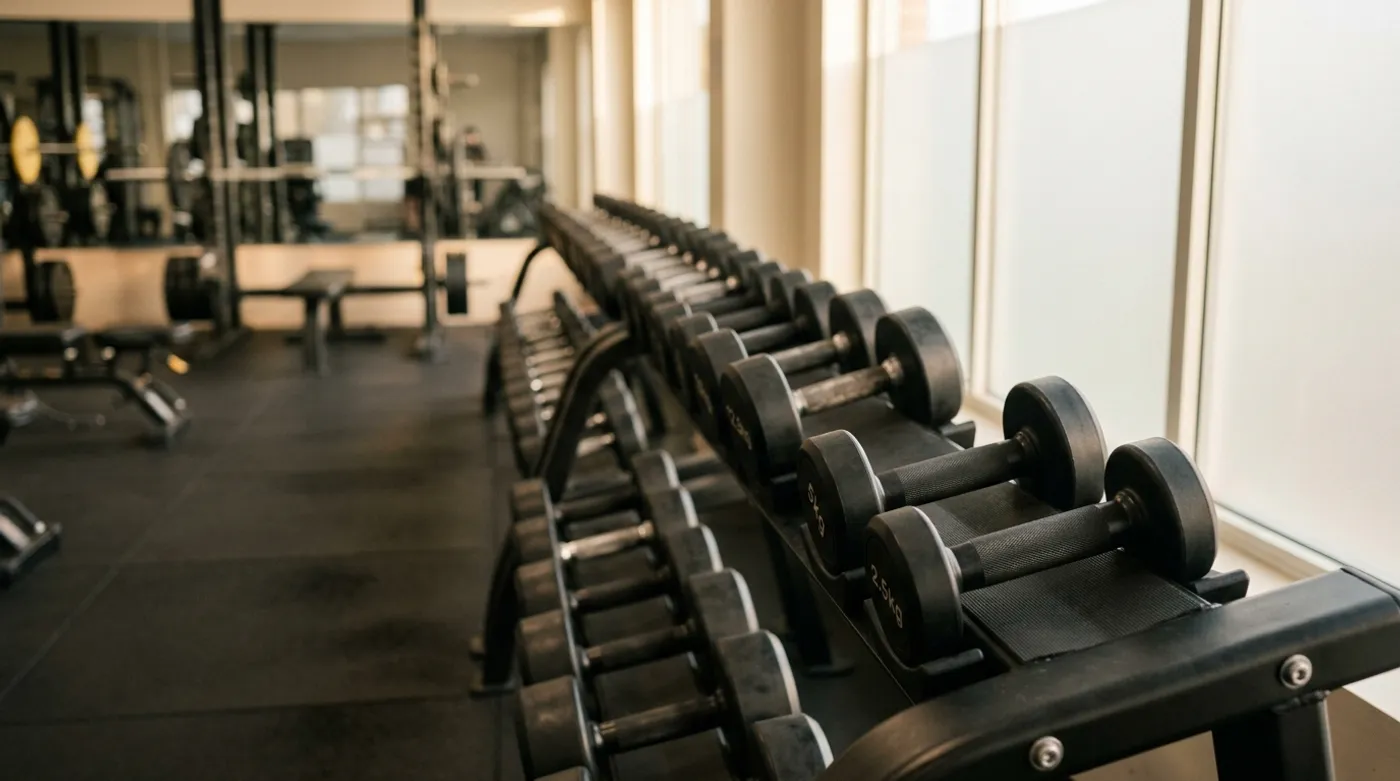
Small weight jumps are especially noticeable on shoulder isolation exercises. Moving from an 8 kg dumbbell to a 10 kg dumbbell is a 25% increase, so forcing the heavier pair too early often changes the movement more than it challenges the delt.
Use a rep range and earn the next load:
- Choose a range such as 12–20 reps.
- Keep the same weight until all sets reach the upper end with clean technique.
- Increase by the smallest available amount.
- Let reps return to the lower end and build again.
This is double progression, and it works particularly well for cable, machine, and dumbbell raises. You can also progress by improving control, reducing momentum, or making the same load feel more stable before adding weight.
Common Shoulder Workout Mistakes
Doing too much front-delt work
Bench press, incline press, dips, and overhead press all load the front delts. Adding several front-raise variations on top is rarely the missing piece. Put more attention toward side and rear delts unless you have a specific reason not to.
Using loads you cannot control
A little natural body movement near the end of a hard set is different from turning every rep into a full-body swing. If the weight changes your setup from the first rep, it is too heavy for the exercise you intended to perform.
Counting every press as equal shoulder volume
A heavy incline press and a cable lateral raise do not train the shoulder in the same way. Track the movements separately and judge whether each region is getting useful work across the week.
Changing exercises before you can measure progress
Shoulder exercises often feel slightly different from one setup to another. Keep a useful variation long enough to learn its path and build performance instead of rotating through every cable angle each session.
Build a Shoulder Workout You Can Repeat
A good shoulder workout is straightforward: press if it serves your goal, prioritize side delts, train rear delts directly, and progress each movement with controlled reps. The best version is not the one with the biggest exercise list. It is the one you can recover from and improve over time.
Steady keeps that process focused by giving each exercise a clear place for sets, reps, load, and progress history—without turning your workout log into a social feed or a crowded program store.
Ready to start applying progressive overload?
Ditch the spreadsheets and complex notes. Join thousands of lifters who use Steady to focus on the workout, track their progress, and automatically know when to add weight.
Download Free for iPhone