How to Build a Push Day Workout
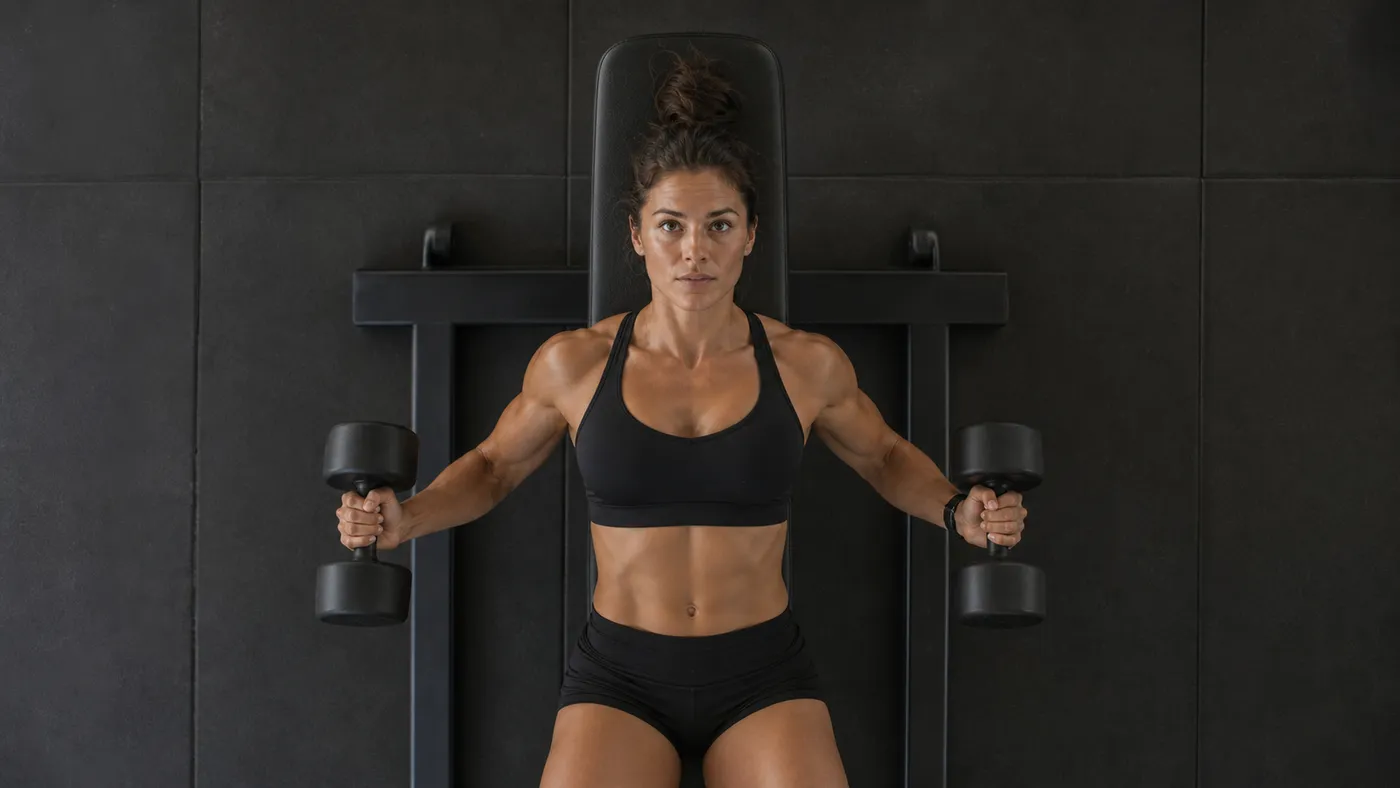
A good push day workout should include one main chest press, one vertical press, one secondary chest movement, lateral-delt work, and one or two triceps exercises. For most lifters, that means 5 to 7 exercises and roughly 12 to 18 hard working sets.
The goal is not to press from every possible angle. It is to train your chest, shoulders, and triceps with enough variety to cover their main functions while keeping the workout repeatable and recoverable.
The Basic Push Day Formula
Use this structure as a starting point:
- Main horizontal press - barbell bench press, dumbbell bench press, or machine chest press
- Vertical press - overhead press, seated dumbbell press, or machine shoulder press
- Secondary chest movement - incline press, dip, cable fly, or pec deck
- Lateral-delt isolation - dumbbell, cable, or machine lateral raise
- Triceps exercise - cable pushdown, overhead extension, or skull crusher
- Optional second triceps or chest exercise - only when it fills a clear gap
This gives the larger compound lifts priority, then uses isolation work to train areas the presses may not cover fully. If you are building a complete split, it fits directly into a push/pull/legs routine.
Start With Your Priority Press
Your first exercise should be the press you most want to improve. Most people start with a flat or incline chest press, but shoulder strength may justify putting an overhead press first.
Choose the movement that fits your goal and joints:
- Barbell bench press for heavier loading and strength practice
- Dumbbell bench press for independent arm movement and a flexible range of motion
- Machine chest press for stability and hard chest work with less setup
- Incline press when upper-chest development is the main priority
- Overhead press when shoulder strength matters more than chest performance
Do not choose the first lift only because it looks most serious. A stable press that feels good and progresses consistently is more useful than a technically demanding lift that irritates your shoulders or changes every session.
For more detail on sequencing, see Should You Do Compound or Isolation Exercises First?.
Add a Vertical Press Without Duplicating Fatigue
A horizontal press mainly trains the chest, front delts, and triceps. A vertical press shifts more work toward the shoulders while still training the triceps.
Good options include:
- Seated dumbbell shoulder press
- Standing barbell overhead press
- Machine shoulder press
- Landmine press
You do not need to load both presses as heavily as possible. If bench press is your main lift, a controlled machine or dumbbell shoulder press often works better second than another high-fatigue barbell movement. The first exercise can drive strength; the second can add productive volume.
If overhead pressing consistently causes discomfort, do not force it just to complete a template. Lateral raises and a shoulder-friendly press angle can still build the delts while you address the underlying issue separately.
Stop a movement that causes sharp, worsening, or persistent pain, and seek guidance from a qualified clinician when appropriate.
Choose Accessories by What Is Missing
After two compound presses, your chest, front delts, and triceps have already done substantial work. Accessories should fill gaps, not repeat the same stress with lighter weights.
Use these roles:
- Upper-chest emphasis: incline dumbbell press, low-to-high cable fly
- Chest isolation: pec deck, cable fly, dumbbell fly
- Side-delt emphasis: cable, dumbbell, or machine lateral raise
- Triceps shortened-position work: cable pushdown
- Triceps lengthened-position work: overhead cable or dumbbell extension
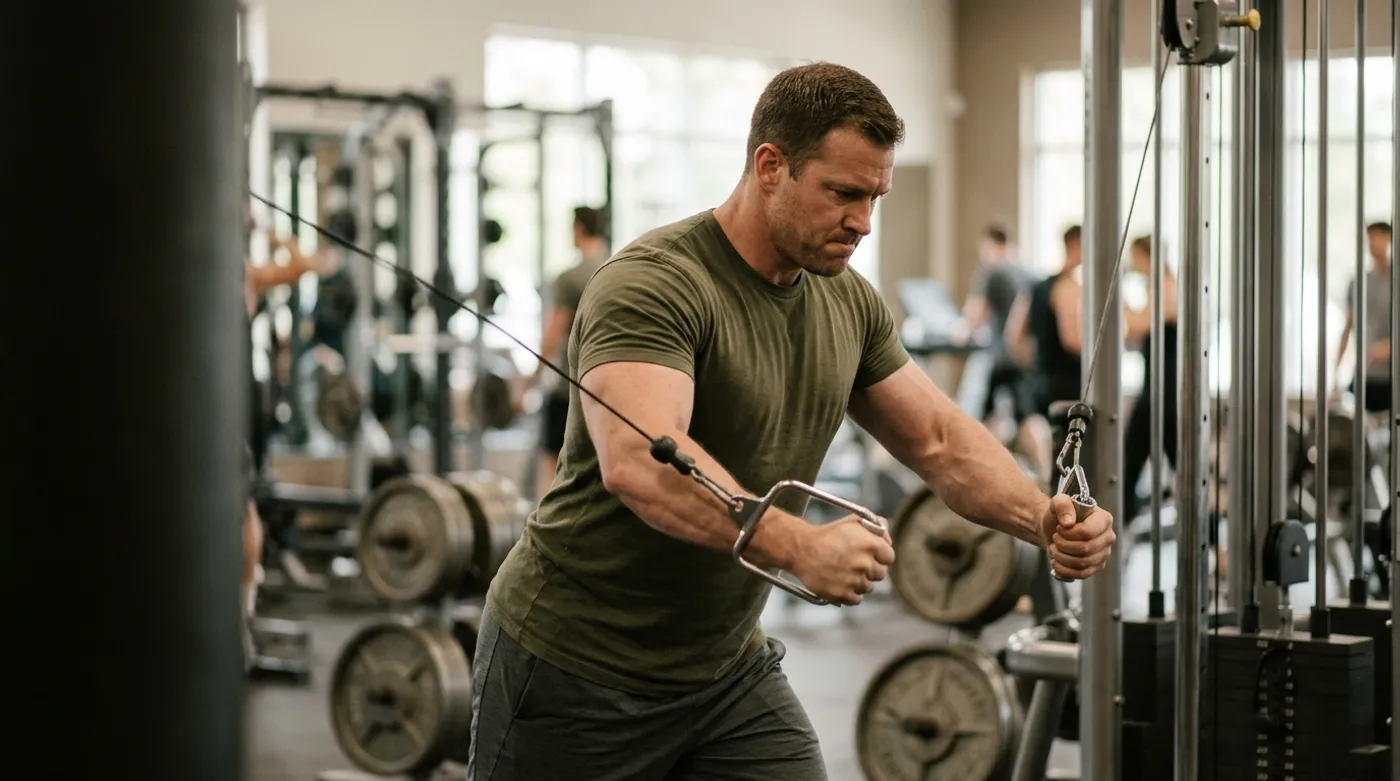 Isolation work earns its place when it adds a movement or muscle emphasis the main presses did not provide.
Side-delt work is particularly useful because presses heavily involve the front delts but often provide less direct stimulus to the side delts. That is why lateral raises belong in many push workouts even when your shoulders already feel tired from pressing.
How Many Sets Should Push Day Have?
Most push days work well with 12 to 18 working sets. The right amount depends on how often you repeat the workout and how much pressing appears elsewhere in your week.
Here is a balanced push day:
| Exercise | Sets |
|---|---|
| Barbell bench press | 4 |
| Seated dumbbell shoulder press | 3 |
| Cable fly | 2 |
| Cable lateral raise | 3 |
| Triceps pushdown | 3 |
| Total | 15 |
If you train push twice per week, each session can be shorter:
| Exercise | Sets |
|---|---|
| Incline dumbbell press | 3 |
| Machine shoulder press | 3 |
| Pec deck | 2 |
| Lateral raise | 3 |
| Overhead triceps extension | 2 |
| Total | 13 |
Count overlap honestly. Four hard bench-press sets are not only chest work; they also fatigue the front delts and triceps. Adding more exercises does not automatically create a more complete workout.
Example Push Day Workouts
Balanced Push Day
- Barbell bench press - 4 sets of 5 to 8
- Seated dumbbell shoulder press - 3 sets of 8 to 12
- Cable fly - 2 sets of 10 to 15
- Cable lateral raise - 3 sets of 12 to 20
- Triceps pushdown - 3 sets of 10 to 15
Hypertrophy Push Day
- Incline dumbbell press - 3 sets of 8 to 12
- Machine chest press - 3 sets of 8 to 12
- Machine shoulder press - 3 sets of 10 to 15
- Pec deck - 2 sets of 12 to 20
- Machine lateral raise - 3 sets of 12 to 20
- Overhead cable triceps extension - 3 sets of 10 to 15
Time-Efficient Push Day
- Dumbbell bench press - 3 sets of 6 to 10
- Machine shoulder press - 3 sets of 8 to 12
- Cable lateral raise - 3 sets of 12 to 20
- Triceps pushdown - 3 sets of 10 to 15
The shorter version still covers the main jobs. You can alternate lateral raises and pushdowns with sensible rest if you need to move faster without compromising the main presses.
Common Push Day Mistakes
The most common mistake is doing too many presses. Flat bench, incline bench, decline bench, dumbbell press, and machine press in one session create plenty of fatigue, but much of the work overlaps. Two presses are usually enough; a third should have a specific purpose.
Another mistake is treating every shoulder exercise as equal. Presses already train the front delts hard. Adding front raises often gives you more of what you already have, while side-delt work may be the missing piece.
Finally, do not leave all triceps work until your elbows are irritated and your technique is rushed. One well-chosen triceps movement performed with control is better than three variations done because the workout did not feel long enough.
How to Track Push Day Progress
Keep the core exercises stable long enough to see a trend. Track load and reps on the main presses, then use consistent technique and rep ranges for lateral raises, chest isolation, and triceps work.
If bench performance improves while shoulder-press reps collapse every week, the session may be too front-loaded. If your chest is progressing but side delts are not, add or improve targeted lateral-raise work instead of another press. Your log should help you adjust the weak link, not encourage you to rebuild the workout after one bad day.
Steady keeps that process focused: build a repeatable push routine, log the work that matters, and compare performance without a social feed or an overcrowded workout store. A good push day is simple enough to repeat and structured enough to improve.
Ready to start applying progressive overload?
Ditch the spreadsheets and complex notes. Join thousands of lifters who use Steady to focus on the workout, track their progress, and automatically know when to add weight.
Download Free for iPhone