How to Add Unilateral Exercises to Your Routine
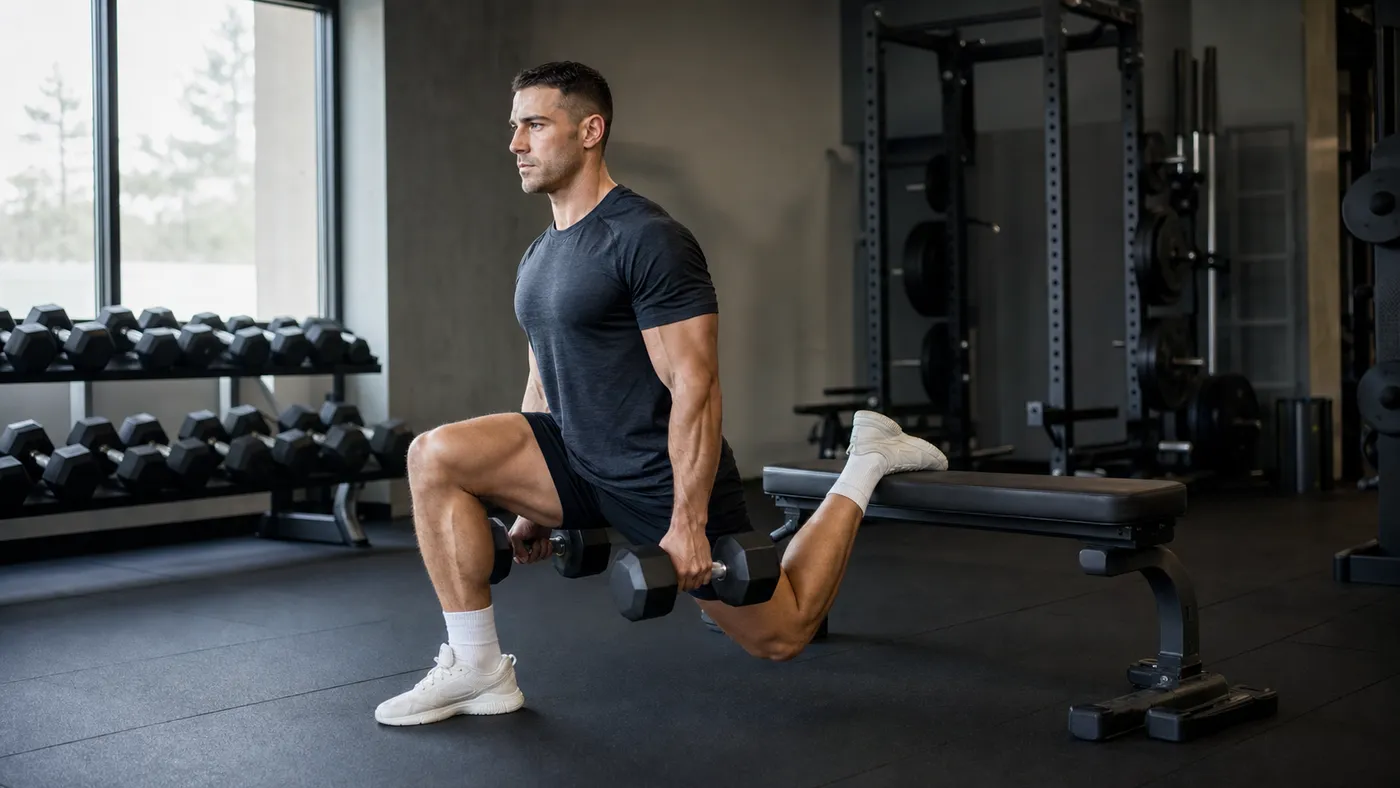
The best way to add unilateral exercises is to use one or two of them as supporting work after your main bilateral lifts. Put them where they solve a clear problem: balance between sides, extra muscle volume, joint-friendly loading, stability, or a range of motion your main lift does not train well.
Unilateral exercises are movements where one side of the body works at a time. Lunges, Bulgarian split squats, step-ups, single-arm rows, one-arm cable presses, single-leg curls, and single-leg presses all fit the category.
They are useful, but they are easy to overdo. A few well-placed unilateral sets can make a routine more complete. Turning every movement into a one-side-at-a-time version can make the workout longer, more fatiguing, and harder to progress.
What unilateral exercises are best for
Unilateral work is not automatically better than bilateral work. It is different.
A barbell squat lets you use more total load and practice a stable whole-body pattern. A Bulgarian split squat usually uses less load, asks more from balance and hip control, and gives each leg direct work through a deep range. Both can build muscle. They just create different demands.
Use unilateral exercises when you want to:
- Reduce side-to-side gaps. If one leg or arm consistently lags, unilateral work makes the difference harder to hide.
- Add volume without loading the spine as heavily. Split squats, lunges, and single-leg presses can train legs hard without needing another heavy back-loaded lift.
- Train stability and control. Single-leg and single-arm movements force you to control rotation, balance, and setup.
- Work around equipment or joint limitations. Some lifters tolerate a reverse lunge better than another heavy squat, or a single-arm cable row better than a barbell row.
- Reach positions bilateral lifts may miss. Deep split squats and step-ups can challenge hip and quad ranges that a short leg press setup does not.
That does not mean every routine needs five unilateral movements. The value comes from choosing the right slot.
Where to place unilateral exercises
Most of the time, unilateral exercises belong after the main lift and before small isolation work.
For a lower-body day, that might look like:
- Squat or leg press
- Romanian deadlift
- Bulgarian split squat or walking lunge
- Leg curl
- Calf raise
For an upper-body pull day:
- Pull-up or pulldown
- Chest-supported row
- Single-arm cable row
- Rear-delt fly
- Curl
This order keeps the high-skill, high-load work early while you are fresh. Then unilateral work adds targeted volume and control before the smaller exercises finish the session.
There are exceptions. If a unilateral lift is your main priority, put it earlier. Someone following a qualified return-to-training plan after an injury, for example, may start with split squats or step-ups. But for general strength and hypertrophy, unilateral work usually performs best as a secondary compound or accessory.
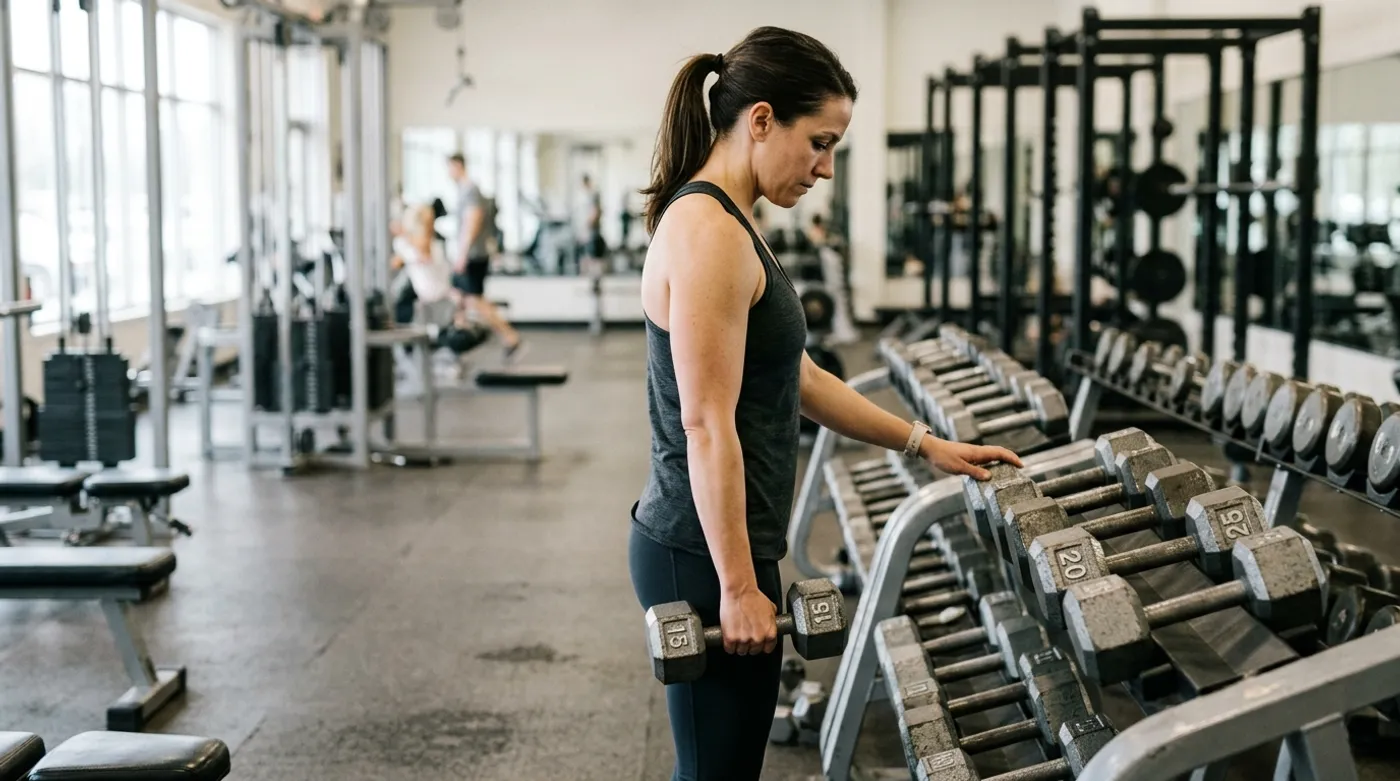 Unilateral exercises often need a more conservative starting load because balance and setup can limit the movement before the target muscle does.
How many unilateral exercises do you need?
Most routines need one unilateral exercise per major region per week, sometimes two if there is a clear reason.
For legs, that might mean one of these:
- Bulgarian split squat
- walking lunge
- reverse lunge
- step-up
- single-leg press
For upper body, it might mean:
- single-arm dumbbell row
- single-arm cable row
- one-arm cable press
- single-arm pulldown
- single-arm lateral raise
If you train legs twice per week, you do not need to do split squats, lunges, step-ups, and single-leg presses every week. Pick one primary unilateral pattern, progress it for several weeks, then rotate if the movement stops fitting your goals or recovery.
A simple weekly setup works well:
- Lower Day 1: heavy squat pattern, hinge, single-leg accessory
- Lower Day 2: leg press or hinge focus, hamstring work, calves, optional lighter unilateral work
That gives you the benefits without turning leg training into a balance workout.
Pick the version that matches the job
Not all unilateral exercises solve the same problem.
If you want more quad and glute stimulus, choose a split squat, lunge, step-up, or single-leg press. If you want hamstrings, choose a single-leg curl or single-leg Romanian deadlift. If you want upper-back control, use a single-arm row or pulldown. If you want pressing control, use a one-arm cable press or landmine press.
Then match the exercise to the kind of effort it can handle.
Good for harder loading: single-leg press, split squat, chest-supported single-arm row, single-arm machine row.
Good for moderate controlled work: reverse lunge, step-up, single-arm cable row, single-arm cable press.
Better kept lighter: single-leg Romanian deadlift, single-arm lateral raise, highly balance-dependent variations.
The less stable the movement, the more form quality matters. A heavy single-leg Romanian deadlift that turns into a wobbling reach is not automatically better than a cleaner moderate set.
Use rep ranges that respect setup fatigue
Unilateral sets take longer because each side works separately. They also create more setup fatigue. You have to brace, balance, switch sides, and repeat the effort.
That is why most unilateral exercises work best in moderate rep ranges:
- Lower-body compounds: 6 to 12 reps per side
- Single-leg machines: 8 to 15 reps per side
- Single-arm rows and presses: 8 to 15 reps per side
- Small isolation movements: 10 to 20 reps per side
You can go heavier, but low-rep unilateral work often becomes limited by balance, setup, or joint position before the target muscle gets enough work. For most lifters, a controlled set of 8 to 12 per side is easier to repeat and progress than a shaky set of 4.
How to progress unilateral exercises
Progress unilateral exercises slowly and consistently. Use the weaker side as the standard.
A practical rule:
- Pick a rep range, such as 8 to 12 per side.
- Start each set with the weaker or less coordinated side.
- Match the stronger side to the weaker side’s reps.
- Increase load only when both sides hit the top of the range with solid form.
For example:
Bulgarian Split Squat
- Week 1: 20 kg x 8 per side
- Week 2: 20 kg x 9 per side
- Week 3: 20 kg x 10 per side
- Week 4: 20 kg x 11 per side
- Week 5: 20 kg x 12 per side
- Week 6: 22 kg x 8 per side
That is the same basic logic as double progression, but with one stricter condition: both sides need to earn the increase.
If you are unsure how to log the sets, the cleanest approach is covered in how to track unilateral exercises: log the load consistently and make the reps mean reps per side.
Common mistakes
The biggest mistake is adding unilateral work because it feels more advanced, not because the routine needs it.
Other common mistakes:
- doing too many unilateral leg movements in one session
- placing balance-heavy exercises before heavy main lifts when strength is the priority
- increasing load before the weaker side is ready
- using a range of motion you cannot repeat from week to week
- changing unilateral variations every workout
- treating right-side and left-side performance as “close enough” when one side clearly limits the set
Unilateral exercises reward patience. They often feel awkward for the first few weeks, then become much more productive once the setup is stable.
How to keep it simple in Steady
In Steady, treat unilateral work like any other important exercise in the routine: give it a clear slot, repeat it long enough to build history, and keep your notes short.
For example, you might add “Bulgarian Split Squat” after your main squat pattern, use a target like 3 sets of 8 to 12, and add a note such as “start left side” or “keep front foot slightly farther forward.” That is enough context to make the next session better without cluttering the log.
The point is not to track every possible asymmetry forever. The point is to make your unilateral work repeatable enough that progress is visible.
The bottom line
Add unilateral exercises when they have a job: balancing sides, adding useful volume, improving control, or training a range your main lifts miss. For most lifters, one well-chosen unilateral movement in a workout is enough.
Start conservatively, place it after the main lift unless it is the day’s priority, and progress only when both sides can complete the target with good form.
Steady helps by keeping the routine focused: clear exercise order, fast logging, useful history, and notes that preserve the details you actually need next time.
Ready to start applying progressive overload?
Ditch the spreadsheets and complex notes. Join thousands of lifters who use Steady to focus on the workout, track their progress, and automatically know when to add weight.
Download Free for iPhone